
James Balwin
A Voice Like Fire

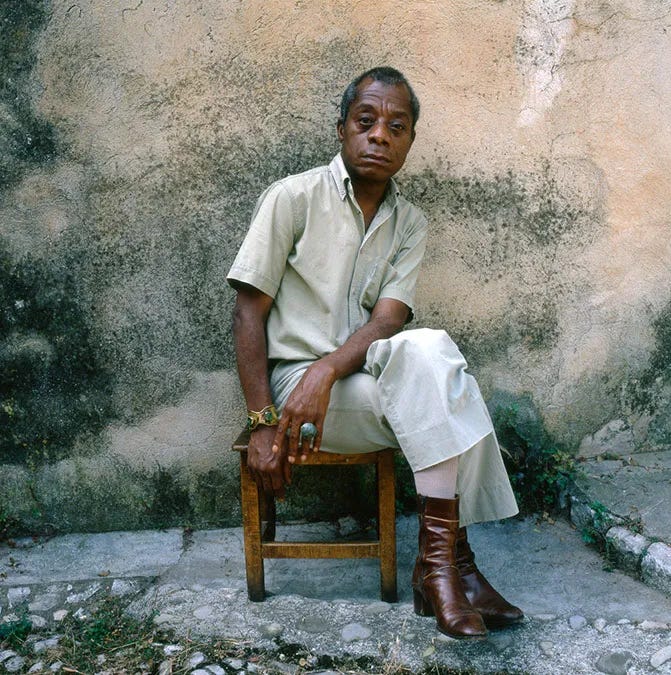
“I spoke in tongues,
I danced,
I writhed,
I wept,
For joy,
I ran
Through the storm,
Shouting ‘Hallelujah!’
These lines from James Baldwin’s poem “Amen” are an invocation of the fervor and fire that defined his life and work. Baldwin wrote with the urgency of a man running through the storm, each word a shout of hallelujah—not in triumph, but in defiance. His prose, poetry, and essays vibrate with the tension between agony and exaltation, always reaching for something beyond the visible.
“Not everything that is faced can be changed, but nothing can be changed until it is faced.” Baldwin’s essays, novels, and poems are the living embodiment of this dictum. These words feel less like an observation and more like a reckoning—a challenge hurled into the void, daring it to respond. Baldwin wasn’t asking for understanding or agreement; he was demanding truth. A man of sharp edges and molten interiors, Baldwin wielded language as both balm and blade, searing the lies of society while offering glimpses of redemption.
In Go Tell It on the Mountain, Baldwin offers a portrait of faith that burns through piety to expose its contradictions. The church here is not a sanctuary; it is both altar and cage, its hymns weighed down by unfulfilled promises. The novel pulses with longing—a boy’s yearning for love, freedom, and a God who doesn’t merely watch suffering but intervenes. Baldwin’s prose, alive with the raw power of confession, forces readers to confront faith not as an escape but as a battleground.
From this deeply personal exploration of identity and salvation, Baldwin shifted to the universality of desire in Giovanni’s Room. Here, love and shame become locked in an intricate dance, their movements constrained by walls of silence. The titular room is both a sanctuary and a trap, its boundaries defined not by its size but by the weight of unspoken truths. Baldwin’s sentences are surgical, each one cutting deeper into the quiet violence of repression. In this novel, Baldwin did not just illuminate queer love; he made readers sit in its ache, its beauty, and its unbearable silence.
The personal and the political fused completely in The Fire Next Time, Baldwin’s most searing critique of America’s soul. “The most dangerous creation of any society is the man who has nothing to lose,” Baldwin writes, a line that burns with prophetic urgency. His essays do not merely call out America’s failings—they strip away its illusions, leaving behind only the raw truth of its systemic injustices. But Baldwin’s fire was not meant to destroy; it was meant to purify. He lit the match not to watch it all burn, but to clear the way for something new to rise.
By the time Baldwin exiled himself to France, it was not to escape the fight but to find the space to see it more clearly. From abroad, he wrote with the clarity of distance and the intimacy of someone who carried America in his marrow. Harlem’s rhythm pulsed through his essays even as he sat in Parisian cafés, his words as sharp as the streets he left behind. Baldwin never truly left America; he carried its scars, its promises, its contradictions, and its fire wherever he went.
James Baldwin defied every category. Black and queer, exile and home, anger and love—his life was a mosaic of contradictions, each shard sharp and luminous, held together by the mortar of his uncompromising honesty. His work demands more than understanding; it demands reckoning. Baldwin’s words refuse to let us look away, forcing us to confront the truths we bury and the fires we fear.
“Not everything that is faced can be changed,” Baldwin warned, “but nothing can be changed until it is faced.” He left no solutions, no easy answers—only fire. And yet, in that fire, there is the echo of
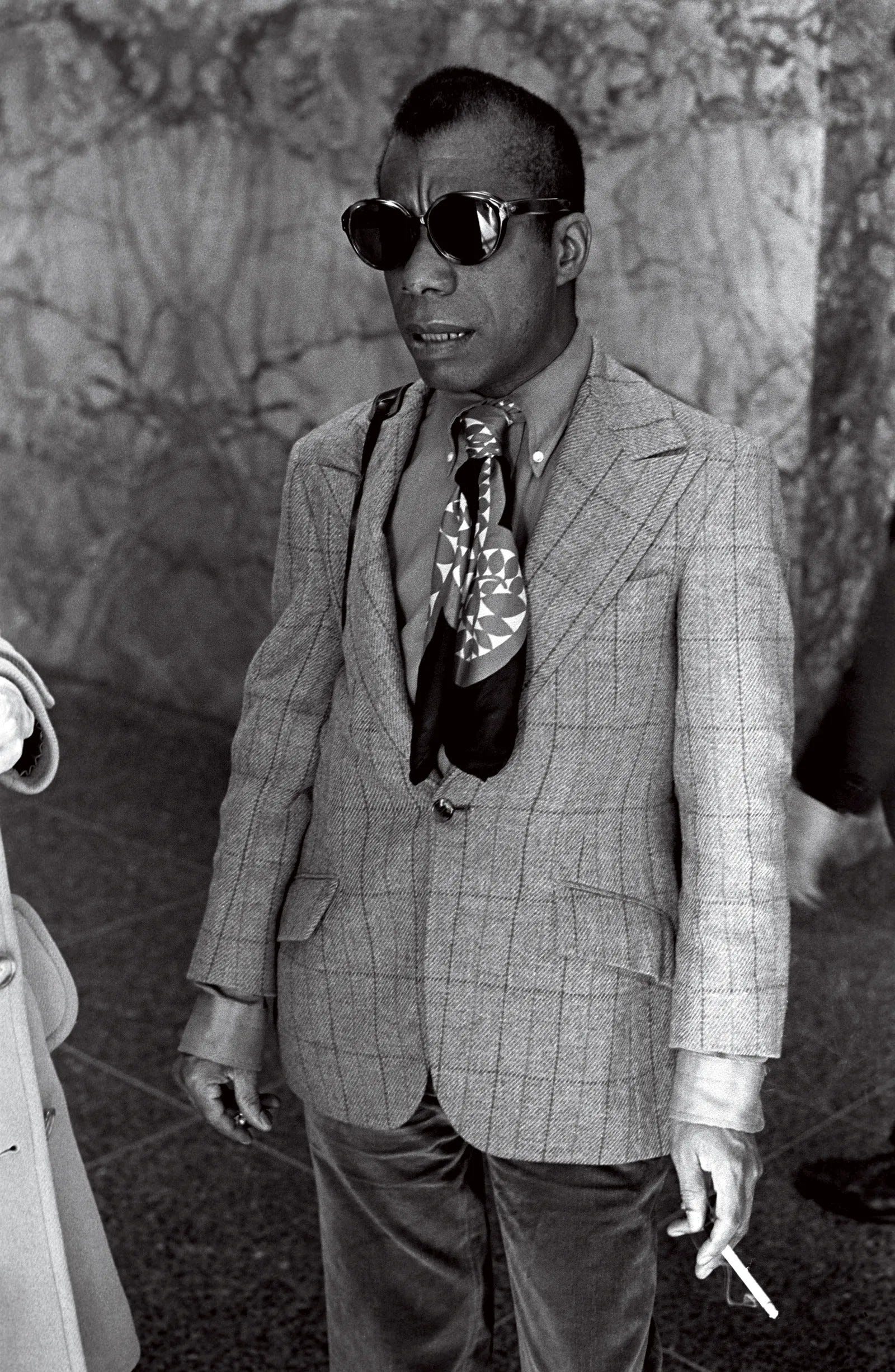
“Amen.” Baldwin’s storm is still raging, his words still running through it, shouting hallelujah. They remind us that the fire is not the end. It is the beginning.